Welcome to UK - India Tourism Company

Karnataka Heritage Trails | UNESCO World Heritage sites | Royal Palaces | Wildlife and Cultural Wonders | UK India Tourism
Karnataka is a spellbinding tapestry of ancient empires, natural wonders, and heritage marvels — a magnet for foreign travellers and UNESCO pilgrims alike. From dramatic ruins that whisper of once-glorious dynasties to lush biodiverse hills that breathe life into legends, Karnataka’s attractions tell stories older than time. Here’s your deep, beautifully structured guide to the major foreign tourist attractions and UNESCO World Heritage Sites in Karnataka.
UNESCO World Heritage Sites in Karnataka
These are jewels on the global heritage map — recognized for their outstanding cultural or natural value.
01. Group of Monuments at Hampi – A Golden Empire Frozen in Stone | Karnataka Heritage | UK India Tourism
Step into a world where ancient kings once ruled, warriors marched through mighty gateways, temple bells echoed across granite hills, and streets flourished with music, trade, and celebration. Welcome to Hampi, a mesmerizing UNESCO World Heritage Site in Karnataka, proudly featured by UK India Tourism — a destination where history breathes, legends whisper, and every stone tells a spellbinding story.
Hampi – The Crown Jewel of Karnataka Heritage
Once the magnificent capital of the Vijayanagara Empire, Hampi was among the wealthiest and most powerful cities in the world between the 14th and 16th centuries. Today, it stands as one of the most famous UNESCO World Heritage Sites in India, attracting foreign tourists, history lovers, architecture admirers, photographers, and cultural explorers from across the globe.
Spread across miles of dreamlike rocky landscapes, Hampi is a spectacular canvas of:
Temple complexes and sacred shrines
Royal enclosures and palace ruins
Stone markets, elephant stables, and mandapas
Hilltop viewpoints and serene riverbanks
This breathtaking fusion of architecture, archaeology, spirituality, and scenic beauty makes Hampi one of the best heritage destinations in Karnataka and India.
Iconic Places to See in Hampi
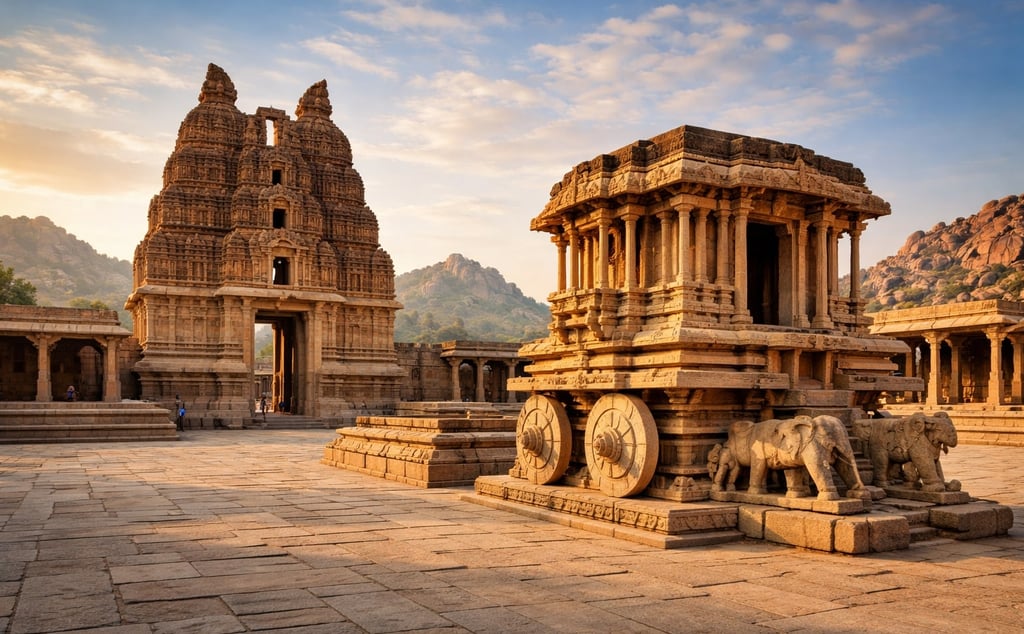
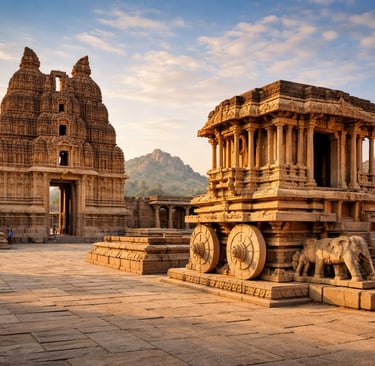
🛕 Vittala Temple & The Iconic Stone Chariot – The Architectural Wonder of Hampi
The Vittala Temple Complex is the shining crown of Hampi — the most photographed, celebrated, and admired monument of this UNESCO World Heritage Site. As you walk into this grand heritage marvel, the first breathtaking sight that welcomes you is the world-famous Stone Chariot, one of India’s most iconic architectural masterpieces. Built in the 16th century during the Vijayanagara Empire, the temple complex is a timeless tribute to artistic brilliance, cultural devotion, and engineering genius.
The temple is equally renowned for its Musical Pillars, carefully carved stone columns that once produced melodic sounds when gently tapped — an astonishing example of ancient innovation. The sprawling courtyard, intricately sculpted mandapas, and mesmerizing carvings narrate stories from Indian mythology, kingship, dance, music, and divine life.
Surrounded by surreal rocky landscapes and bathed in golden sunlight during sunset, the Vittala Temple feels like stepping into a mystical world frozen beautifully in time. It is a photographer’s paradise, a history lover’s dream, and an unforgettable experience for every visitor. With UK India Tourism, international travellers enjoy guided stories, comfort, heritage insights, and carefully planned exploration — making the visit deeply meaningful, luxurious, and magical.
🛕 Virupaksha Temple – The Sacred Heart of Hampi
Standing tall for over 1,300 years, the Virupaksha Temple is one of the oldest functioning temples in India and the spiritual heartbeat of Hampi. Dedicated to Lord Shiva, this grand temple is not just an architectural wonder, but a living centre of devotion, rituals, festivals, and cultural vibrance. Unlike many historic ruins, Virupaksha Temple is fully active, resonating daily with prayers, bells, lamps, and mystical chants, offering travellers a rare glimpse into India’s living heritage.
The towering gopuram, majestic corridors, ancient murals, elephant blessings, and breathtaking temple courtyards make the experience enchanting. Pilgrims, monks, photographers, historians, and curious travellers gather here to feel the divine charm of Karnataka’s greatest heritage landmark.
Just outside the temple, the lively Hampi bazaar and surrounding ruins create a captivating contrast of faith and history existing together. Sunsets around the temple paint the sky in magical hues, while the Tungabhadra river nearby adds serenity and scenic beauty to the sacred ambiance.
For foreign travellers, visiting Virupaksha Temple is not merely sightseeing; it is an emotional connection to India’s timeless spirituality, architecture, and culture. With UK India Tourism, guests explore comfortably, with guided understanding, cultural etiquette support, and beautifully curated travel experiences.
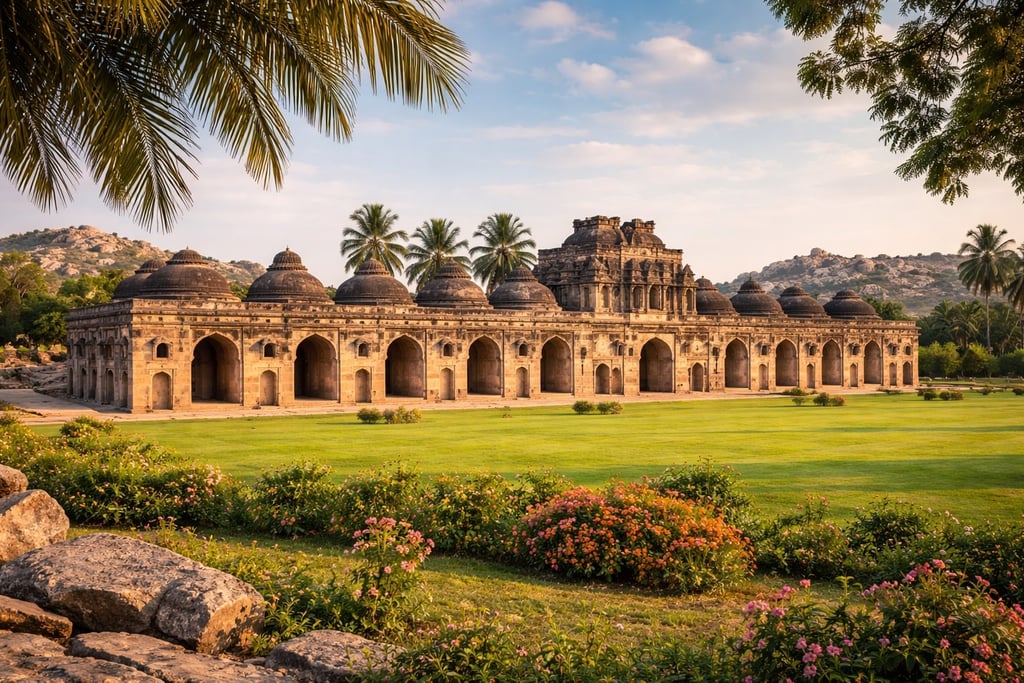
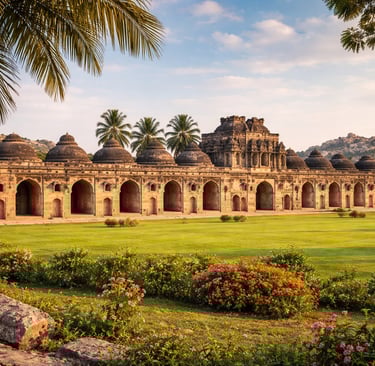
🏰 Elephant Stables & Royal Enclosure – Echoes of Regal Grandeur
The Elephant Stables and Royal Enclosure of Hampi stand as magnificent reminders of the Vijayanagara Empire’s royal might, architectural sophistication, and luxurious lifestyle. The Elephant Stables — a stunning row of massive domed chambers — were once home to the royal war elephants and ceremonial elephants of the empire. Their Indo–Islamic architectural design, symmetry, and scale leave every visitor amazed by the engineering brilliance of the 15th century.
Nearby lies the spectacular Royal Enclosure, once the political and ceremonial heart of Hampi. Here, kings planned strategies, hosted royal gatherings, celebrated festivals, and welcomed important dignitaries. The massive stone platforms, water tanks, bath chambers, treasury remnants, and underground passages unfold fascinating tales of royal life, grandeur, and power.
These structures make travellers visualize the empire’s glory vividly — armored elephants, royal guards, musicians, dancers, and majestic kings moving through these very courtyards centuries ago. It is history you don’t just see; you feel it.
Today, surrounded by peaceful landscapes, gentle breezes, and golden sunlight, the Royal Enclosure and Elephant Stables create an unforgettable heritage walk. With UK India Tourism, visitors enjoy enriching storytelling tours, comfortable arrangements, and picture-perfect exploration with care, safety and comfort.
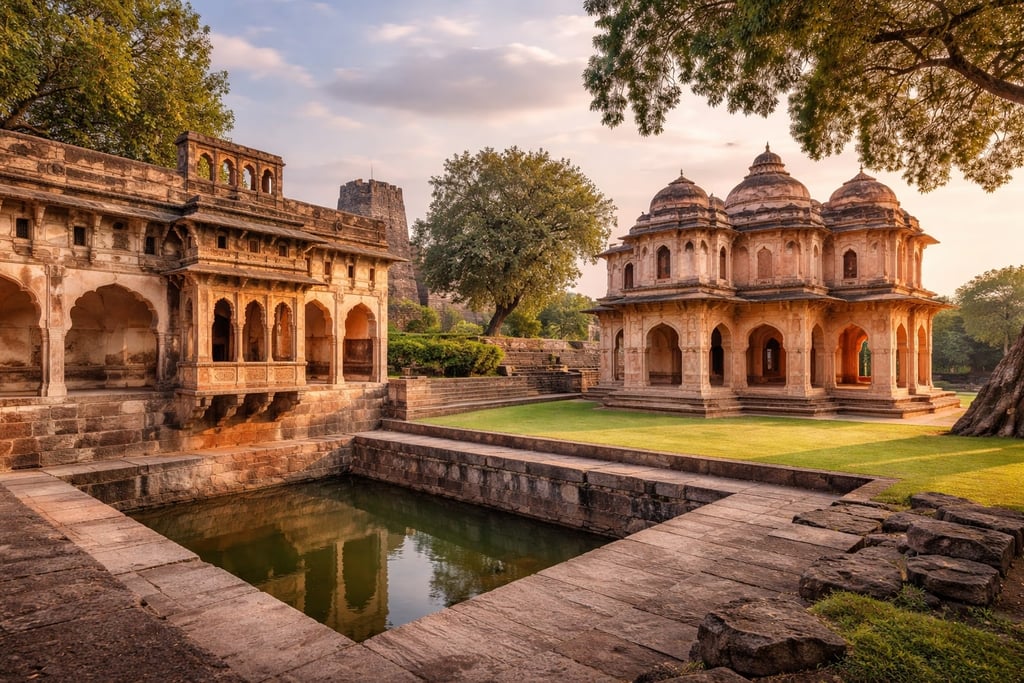
👑 Queen’s Bath & Lotus Mahal – Royal Elegance Frozen in Time
The Queen’s Bath and Lotus Mahal in Hampi reveal the softer, elegant, and artistic side of royal life in the Vijayanagara Empire. These heritage masterpieces represent luxury, refinement, and advanced architectural intelligence far ahead of their time.
The Queen’s Bath is an extraordinary enclosed bathing chamber surrounded by beautifully carved balconies, corridors, and watch points. Once filled with fragrant water, flower petals, music, and royal celebration, this chamber symbolizes sophistication and royal leisure. Even today, its remains reflect grace, royalty, and astounding creativity.
The enchanting Lotus Mahal, named for its lotus-shaped architectural design, is perhaps one of the most beautiful and photogenic structures in Hampi. With graceful arches, delicate carvings, symmetrical domes, and cooling ventilation design, it served as a royal retreat — believed to be used by queens and princesses for gatherings, conversations, and relaxation.
Set inside the Zenana Enclosure, surrounded by calm landscapes and historical silence, these monuments give international travellers insight into royal elegance, feminine spaces, and cultural aesthetics of ancient India.
With UK India Tourism, guests explore these heritage treasures comfortably, learning hidden stories, historical romance, cultural symbolism, and architectural secrets while enjoying premium travel assistance and warm hospitality.
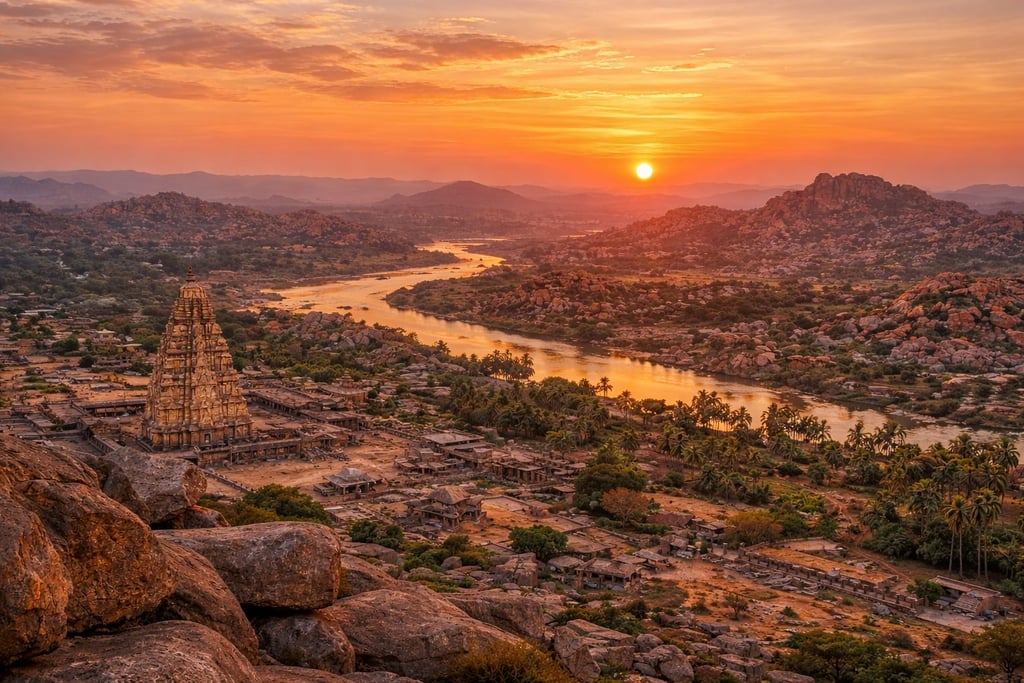
🌄 Matanga Hill & Sunset Viewpoints – Where Heaven Meets Heritage
For travellers who love nature, adventure, photography, and breathtaking scenery, Matanga Hill and the iconic sunset viewpoints of Hampi create pure magic. Rising proudly above the mystical stone landscape, Matanga Hill offers one of the most stunning panoramic views in India. From the summit, visitors witness endless stretches of temples, ancient ruins, lush palm groves, rocky boulders, and the shimmering Tungabhadra River running gracefully across the land.
Sunrise and sunset here are truly unforgettable — the sky turns gold, pink, orange, and crimson while the ruins glow like celestial sculptures under the fading sunlight. It feels like watching history embrace nature under heaven’s spotlight.
Matanga Hill is also associated with mythology, believed to be connected to the Ramayana. The scenic walks, peaceful silence, gentle winds, and incredible vistas make it a dream location for photographers, romantic travellers, adventure lovers, and spiritual seekers.
Whether you choose a guided trek, a relaxed sunset watch, or a magical photography experience, this is a memory that stays forever.
With UK India Tourism, international travellers enjoy safe guidance, comfortable pacing, curated viewpoints, and thoughtful travel support — ensuring beauty, comfort, and unforgettable moments blend together perfectly during your Karnataka heritage journey.
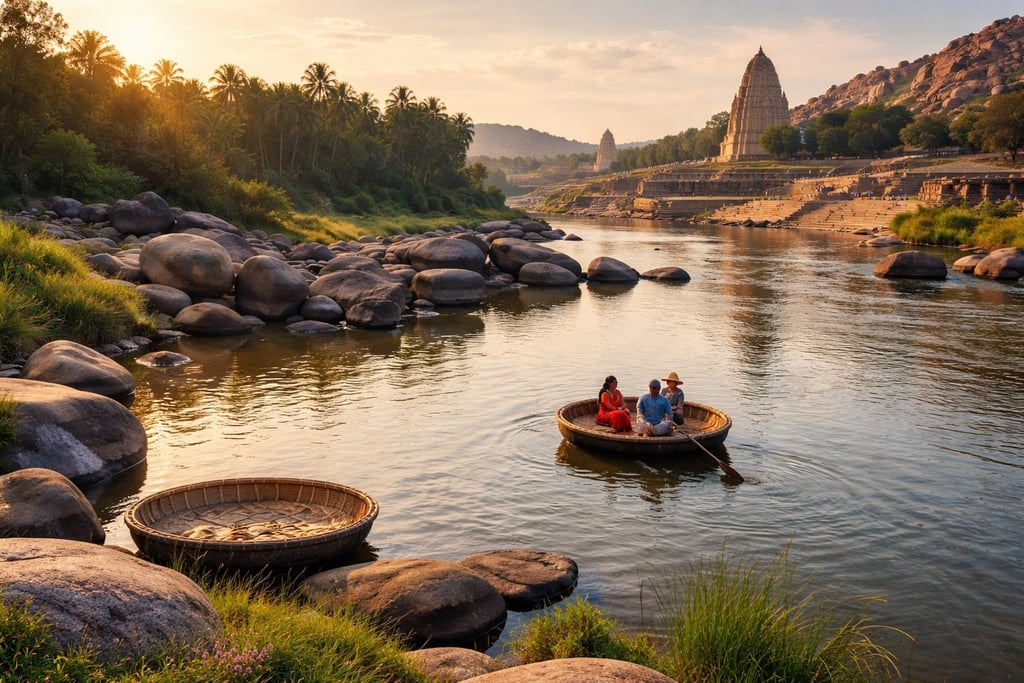
🌊 Tungabhadra River & Coracle Experience – The Soulful Lifeline of Hampi
Flowing gently through the mystical landscapes of Hampi, the Tungabhadra River is not just a river; it is the soulful lifeline that nurtured the Vijayanagara Empire for centuries. It silently watched royal processions, temple rituals, bustling markets, and glorious festivals — and today, it welcomes travellers with calm waters, soothing breezes, and enchanting scenery.
The riverbanks are dotted with ancient ghats, sacred shrines, yoga points, and tranquil viewpoints where time seems to slow down beautifully. One of the most unforgettable experiences here is the traditional coracle ride — a round bamboo boat gently gliding over crystal waters, surrounded by giant boulders, carved structures, curious monkeys, and breathtaking landscapes. The ride feels like floating through history, offering rare vantage views of temples, ruins, and river cliffs.
Sunrise at the Tungabhadra feels peaceful and spiritual; sunset paints the river gold, creating dreamy photography opportunities. Many travellers love sitting by the river, meditating, relaxing, or simply absorbing the quiet charm of nature embracing heritage.
With UK India Tourism, international guests enjoy well-planned river experiences, trusted guides, safety arrangements, and seamless comfort — making your Tungabhadra exploration serene, memorable, and blissfully magical.
🏛️ Hampi Bazaar & Market Street – Where Heritage Meets Lively Memories
Stretching proudly in front of the majestic Virupaksha Temple, the Hampi Bazaar, also known as Market Street, once bustled with royal traders, jewel merchants, silk dealers, musicians, and travellers from distant lands. During the Vijayanagara Empire, this grand avenue was one of the richest and most vibrant marketplaces in medieval India, famous for priceless diamonds, pearls, horses, spices, and luxurious goods.
Today, walking through Hampi Bazaar feels like stepping into a living chapter of history. The long stone-pillared pavilions, ancient shop platforms, temples, shrines, and heritage structures whisper tales of prosperity, celebration, and cultural brilliance. Visitors can still feel the energy of a glorious past while exploring handicraft stalls, local souvenirs, traditional clothing, stone crafts, paintings, and charming cafés.
It is also a delightful place to interact with locals, taste regional flavours, enjoy photography, witness temple life, and soak in the authentic heritage atmosphere of Hampi. Early mornings and evenings are especially magical here, with golden light illuminating ancient structures and creating postcard-perfect scenes.
With UK India Tourism, guests experience Hampi Bazaar in comfort and confidence — with guided storytelling walks, curated shopping assistance, cultural etiquette guidance, relaxed itineraries, and thoughtful care, ensuring every traveller enjoys history, culture, and joyful memories effortlessly.
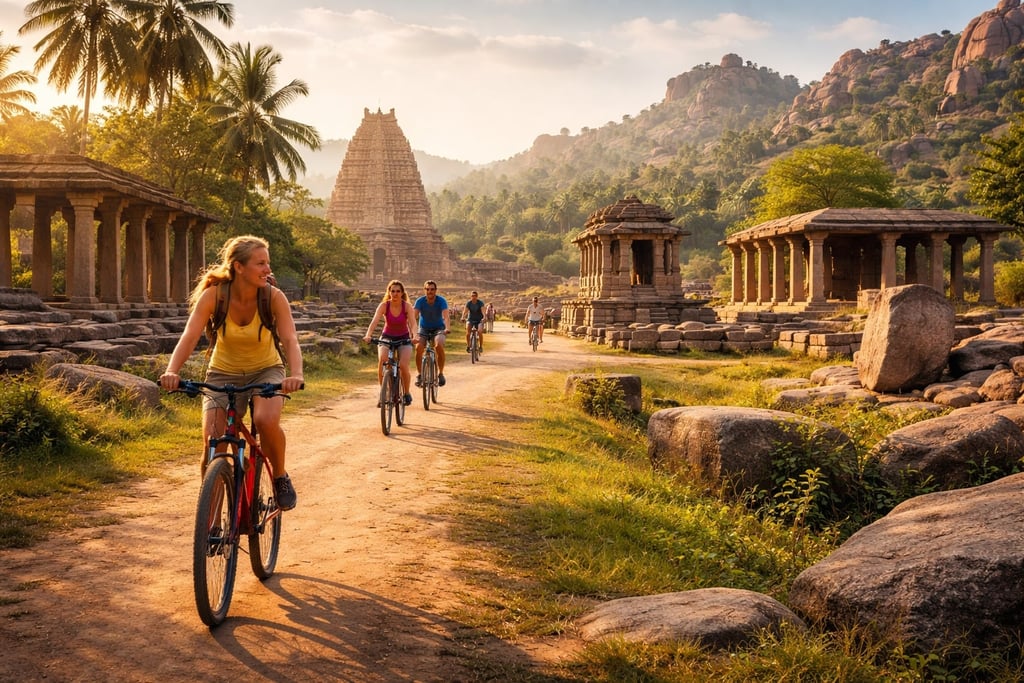
🚴 Hampi Cycling Trails – Adventure, Freedom & Heritage on Two Wheels
For travellers who love a little thrill with their history, the Hampi Cycling Trails offer one of the most exciting, immersive, and unforgettable ways to explore this UNESCO World Heritage wonder. Imagine pedalling through ancient stone pathways, heritage streets, open landscapes, palm groves, riversides, and grand ruins — all under the warm golden sun and fresh Karnataka breeze. Cycling in Hampi feels like travelling back in time, slowly and soulfully, discovering stories hidden in every turn.
These trails take travellers through temple complexes, royal ruins, countryside villages, rocky hills, scenic viewpoints, and historic sites, making the journey as beautiful as the destinations. Whether you are an adventure-loving traveller, photographer, backpacker, family explorer, or international tourist curious about authentic India, these cycling routes offer the perfect blend of fun, freedom, nature, and heritage.
One moment you’re stopping to admire the Stone Chariot, the next you’re gliding past rice fields, stopping by peaceful lakes, interacting with friendly locals, or resting under banyan trees like explorers of old. Cycling also allows you to cover more attractions at your own pace, away from crowds, while enjoying the charm of open landscapes and breathtaking views.
With UK India Tourism, guests enjoy safe, well-organised cycling experiences, quality bicycles, expert guidance, comfortable pacing, refreshment stops, and thoughtful care — ensuring a joyful, secure, and enriching adventure. The Hampi Cycling Trails are not just an activity; they are a moving story, a beautiful journey, and one of the most memorable highlights of your Karnataka Heritage Tour.
✨ Why International Travellers Love Hampi
A world-class UNESCO World Heritage experience
Extraordinary Indian architecture and history
Stunning landscapes of boulders, hills, and riverbanks
Perfect for cultural tourism, heritage exploration, photography, and adventure
Peaceful, mystical, and deeply inspiring
🌿 More Than Monuments – A Living Experience
Hampi is not just a place to see… it is a world to feel.
Walk through ancient bazaars, take a coracle ride on the Tungabhadra River, explore serene temples, enjoy cycling trails, and soak in the calm magic of timeless ruins under open skies.
Every dawn feels like a blessing.
Every sunset feels like poetry.
Every moment feels unforgettable.
🏆 Hampi with UK India Tourism – Travel Beautifully, Comfortably & Safely
At UK India Tourism, we craft enchanting and worry-free journeys for international travellers.
✔️ Expert-guided heritage tours
✔️ Comfortable stays & curated itineraries
✔️ Photography-friendly and senior-friendly planning
✔️ Safe, hygienic, and budget-smart travel packages
Let us take you to Hampi’s wonders — with comfort, care, and a touch of love.
02. Group of Monuments at Pattadakal – Where Temple Architecture Reached Perfection
Nestled quietly on the banks of the Malaprabha River in northern Karnataka, the Group of Monuments at Pattadakal stands as a timeless open-air museum of Indian temple architecture. Recognised as a UNESCO World Heritage Site, Pattadakal represents a golden chapter in India’s cultural and architectural history, where art, faith, and royal ambition came together in perfect harmony.
Between the 7th and 8th centuries, Pattadakal flourished under the powerful Chalukya dynasty, serving as the ceremonial centre where kings were crowned. Today, its cluster of exquisitely carved temples attracts foreign tourists, historians, architects, and culture lovers seeking to understand how North and South Indian architectural styles blended into something truly extraordinary.
For travellers with UK India Tourism, Pattadakal offers a peaceful, uncrowded, deeply enriching heritage experience — a place where silence speaks through stone and history unfolds at every step.
Architectural Fusion – Nagara Meets Dravida
What makes Pattadakal globally significant is its rare architectural harmony. It is one of the very few places in India where Nagara (North Indian) and Dravida (South Indian) temple styles coexist side by side, beautifully balanced within a single complex. This fusion reflects the artistic vision of the Chalukyan rulers, who encouraged experimentation and cultural exchange.
The Nagara-style temples feature curvilinear towers and vertical emphasis, while the Dravida-style structures display stepped pyramidal towers and expansive mandapas. Walking through Pattadakal feels like reading a stone manuscript on the evolution of Indian architecture — every temple representing a different artistic philosophy.
Foreign visitors are especially fascinated by how Pattadakal acts as a bridge between architectural traditions, making it a must-visit UNESCO destination for students of design, history, archaeology, and heritage tourism.
Virupaksha Temple – The Crown Jewel of Pattadakal
The most celebrated monument in Pattadakal is the Virupaksha Temple Pattadakal, built in the 8th century by Queen Lokamahadevi to commemorate her husband’s victory over the Pallavas. This grand temple stands as a symbol of royal pride, devotion, and artistic excellence.
Dedicated to Lord Shiva, the temple is adorned with intricate carvings depicting scenes from the Ramayana, Mahabharata, and Puranic legends. The towering Dravida-style vimana, richly sculpted pillars, and detailed friezes showcase the peak of Chalukyan craftsmanship.
For international travellers, Virupaksha Temple is not just a religious structure — it is a storytelling monument where mythology, politics, and art come alive in stone. Guided tours by UK India Tourism ensure visitors understand the symbolism, history, and architectural brilliance behind every carving.
Mallikarjuna Temple – Elegance in Stone
Standing gracefully beside Virupaksha Temple is the Mallikarjuna Temple Pattadakal, built by Queen Trailokyamahadevi. Though slightly smaller, it mirrors the grandeur and artistic sophistication of its neighbour, offering a more intimate yet equally captivating experience.
The temple’s carvings are refined and expressive, with detailed depictions of gods, goddesses, dancers, and celestial beings. The calm symmetry of the structure, combined with its serene setting, makes it especially appealing to travellers seeking quiet reflection and deeper cultural connection.
Foreign tourists often appreciate Mallikarjuna Temple for its elegance, balance, and storytelling reliefs — a reminder that beauty does not always rely on scale, but on craftsmanship and intention.
Other Significant Temples at Pattadakal
Beyond the grand royal temples, Pattadakal is home to several other architecturally important shrines, including the Sangameshwara, Galaganatha, Kashivishwanatha, Jambulingeshwara, and Papanatha Temples. Each represents a unique stage in architectural experimentation and stylistic transition.
The Papanatha Temple, in particular, fascinates visitors due to its mixed Nagara–Dravida design, highlighting the Chalukyas’ willingness to innovate. These temples collectively illustrate how Pattadakal functioned as an architectural laboratory for ancient India.
Exploring these monuments allows foreign travellers to appreciate the depth, diversity, and progression of Indian temple architecture in one compact, walkable heritage site.
Cultural & Historical Importance of Pattadakal
Pattadakal was not merely a religious site — it was a royal ceremonial centre, where kings were crowned and imperial authority was affirmed. Its location near Badami and Aihole forms a historic triangle that charts the rise of early Indian temple architecture.
As a UNESCO World Heritage Site, Pattadakal holds outstanding universal value, preserving not just structures but the intellectual and artistic spirit of an era. For international visitors, this makes Pattadakal an essential stop on any Karnataka Heritage Trail.
Why Foreign Tourists Love Pattadakal
Foreign travellers are drawn to Pattadakal for its:
UNESCO World Heritage recognition
Calm, uncrowded exploration experience
Architectural significance and symmetry
Perfect blend of history, culture, and art
Proximity to Badami and Aihole heritage sites
Unlike busier monuments, Pattadakal allows slow travel — time to observe, photograph, and truly absorb the essence of ancient India.
Explore Pattadakal with UK India Tourism
With UK India Tourism, your journey to Pattadakal is seamless, insightful, and deeply rewarding. We offer expertly guided heritage tours, comfortable travel arrangements, and thoughtfully curated itineraries that connect Pattadakal with Hampi, Badami, Aihole, and other UNESCO treasures of Karnataka.
✨ Plan Your Karnataka Heritage Journey Today
Discover Pattadakal UNESCO Tours
Explore Karnataka Heritage Trails
Travel safely, comfortably, and beautifully with UK India Tourism
UK India Tourism – Where India’s greatest stories become your most cherished memories.
03.Sacred Ensembles of the Hoysala – India’s Poetry in Stone
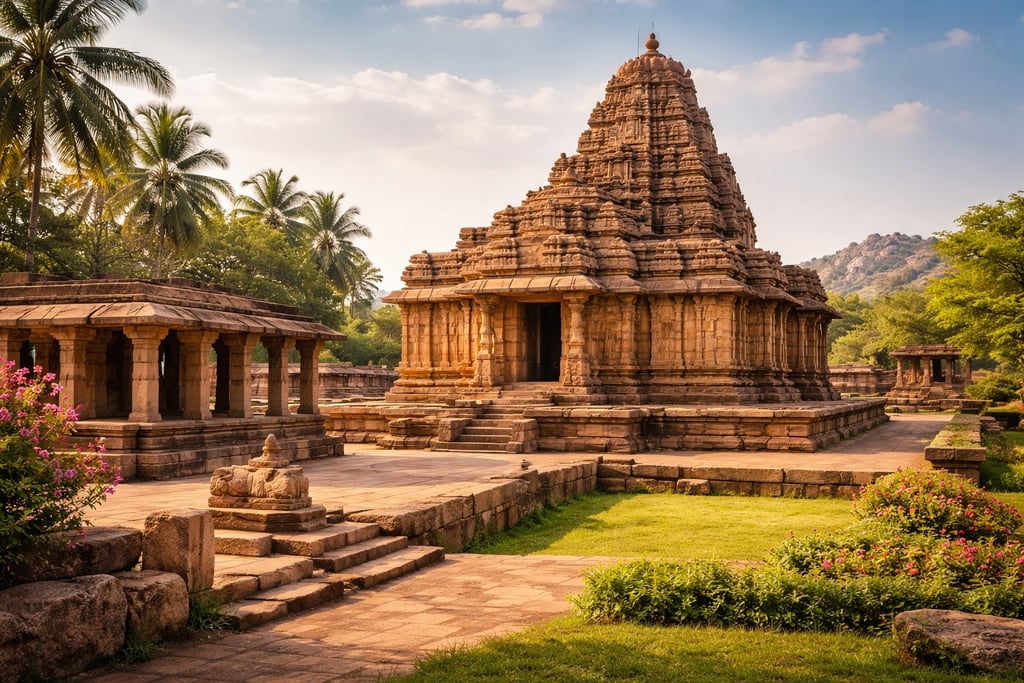
The Sacred Ensembles of the Hoysala represent one of the most refined artistic achievements in the history of Indian temple architecture. Recently inscribed as a UNESCO World Heritage Site, this extraordinary ensemble celebrates the unmatched craftsmanship of the Hoysala dynasty, which ruled large parts of Karnataka between the 11th and 14th centuries.
Unlike towering temples built for grandeur alone, Hoysala temples invite visitors closer — encouraging slow exploration, careful observation, and deep admiration. Built using soft soapstone, these temples are famed for their intricate carvings, star-shaped platforms, detailed friezes, and storytelling sculptures that depict gods, goddesses, celestial dancers, animals, epics, and everyday life with astonishing precision.
Located across Belur, Halebidu, and Somanathapura, the Hoysala temples together form a sacred artistic journey — one that fascinates foreign travellers, architects, historians, photographers, and cultural explorers seeking India’s most delicate and intellectually rich heritage.
Chennakeshava Temple, Belur – Stories Etched in Divine Stone
The Chennakeshava Temple Belur stands as the grand introduction to Hoysala artistry and devotion. Commissioned in 1117 CE by King Vishnuvardhana, this temple was built to celebrate military victories and royal transformation, making it both a spiritual and political landmark.
Dedicated to Lord Vishnu in his form as Chennakeshava, the temple is renowned for its perfect symmetry, sculpted pillars, bracket figures (madanikas), and narrative panels. Every inch of the temple exterior is alive with movement — dancers frozen mid-step, warriors locked in battle, musicians playing eternal rhythms, and mythological scenes unfolding like a stone manuscript.
Inside, the polished lathe-turned pillars reflect light with mirror-like smoothness, showcasing advanced engineering far ahead of its time. Foreign visitors are often mesmerised by how close one can stand to the carvings — no towering height separates observer from art.
Set in a vibrant town with temple rituals still alive, Chennakeshava Temple offers travellers an immersive experience where heritage, devotion, and living culture merge seamlessly.
Hoysaleswara Temple, Halebidu – A Sensory Feast of Sculpture
If Belur introduces Hoysala elegance, Hoysaleswara Temple Halebidu overwhelms the senses with sculptural abundance. Built in the 12th century and dedicated to Lord Shiva, this magnificent twin-shrine temple is widely regarded as one of the most elaborately carved temple complexes in India.
The temple walls are wrapped in continuous horizontal bands of sculptures — elephants, horses, floral designs, mythological stories, and divine figures — each carved with remarkable detail and rhythm. Scenes from the Ramayana, Mahabharata, and Shaiva traditions unfold in breathtaking sequence, inviting visitors to walk around the temple slowly, discovering new details at every step.
Despite invasions that left parts incomplete, the temple’s artistic richness remains unmatched. The subdued village setting of Halebidu adds to the experience, allowing travellers to explore peacefully without crowds.
For international tourists, Hoysaleswara Temple feels like stepping into a sculpture gallery without walls — raw, intimate, intellectual, and profoundly moving.
Keshava Temple, Somanathapura – Serenity Amidst Rural Heritage
Gracefully rising from a quiet village landscape, the Keshava Temple Somanathapura offers a calmer, more contemplative expression of Hoysala genius. Built in 1268 CE, this perfectly preserved temple showcases the mature phase of Hoysala design.
Dedicated to Lord Krishna in the form of Keshava, the temple stands on a star-shaped platform, adorned with flawless carvings that appear almost lace-like in delicacy. The symmetry, proportion, and consistency of detail reflect extraordinary planning and artistic discipline.
Surrounded by open skies, rural fields, and gentle silence, Somanathapura allows visitors to experience heritage without distraction. It is especially loved by photographers, slow travellers, and those seeking a deeper emotional connection with history.
Foreign visitors often describe this temple as peaceful, elegant, and deeply spiritual — a place where time seems to pause and stone speaks softly.
Why the Hoysala Temples Matter to the World
The Sacred Ensembles of the Hoysala are not just temples — they are masterclasses in art, engineering, storytelling, and devotion. Their UNESCO inscription recognises the universal value of craftsmanship that transcends geography and religion.
For global travellers, these temples offer:
Close-up interaction with heritage art
Exceptional storytelling through sculpture
Calm, uncrowded exploration
Insight into South India’s golden architectural age
Explore the Hoysala Heritage with UK INDIA TOURISM
With UK INDIA TOURISM, experience the Sacred Ensembles of the Hoysala through expertly curated journeys that connect Belur, Halebidu, and Somanathapura seamlessly. Enjoy knowledgeable guides, comfortable travel, and thoughtfully paced itineraries designed for international travellers.
✨ Discover Karnataka’s UNESCO treasures
✨ Walk through stories carved in stone
✨ Travel with comfort, insight, and authenticity
UK INDIA TOURISM – Where India’s finest heritage becomes your most unforgettable journey.
04.Western Ghats – A Living Natural Wonder of India
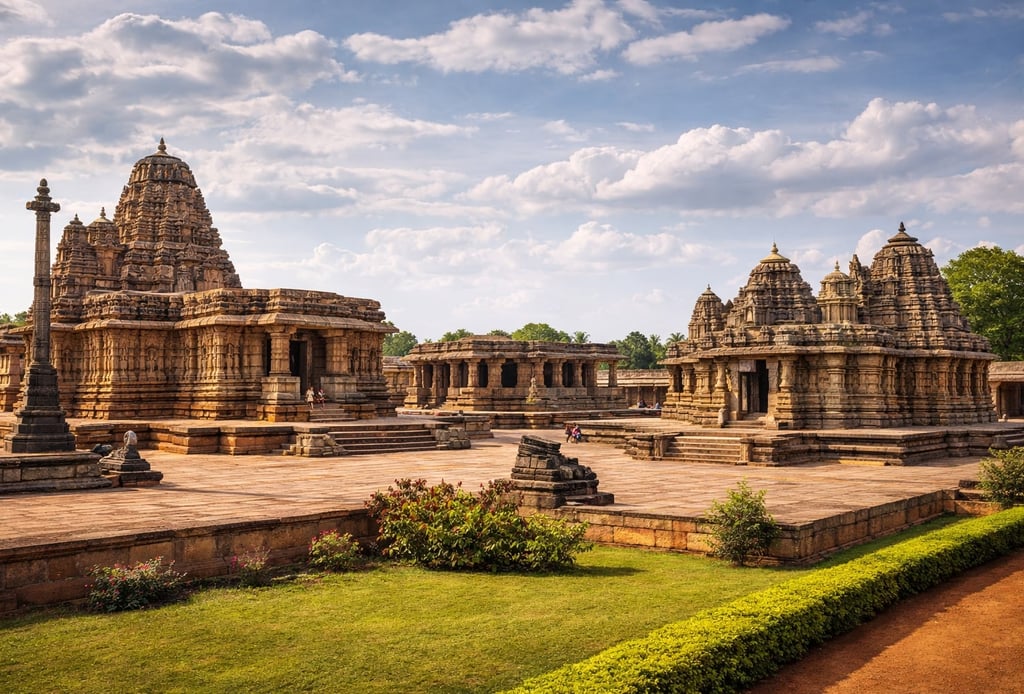
The Western Ghats are among the most extraordinary natural landscapes on Earth, stretching majestically along India’s western edge and earning recognition as a UNESCO World Heritage Natural Site. Often called the green spine of India, the Western Ghats are older than the Himalayas and play a vital role in shaping the country’s climate, rivers, and biodiversity.
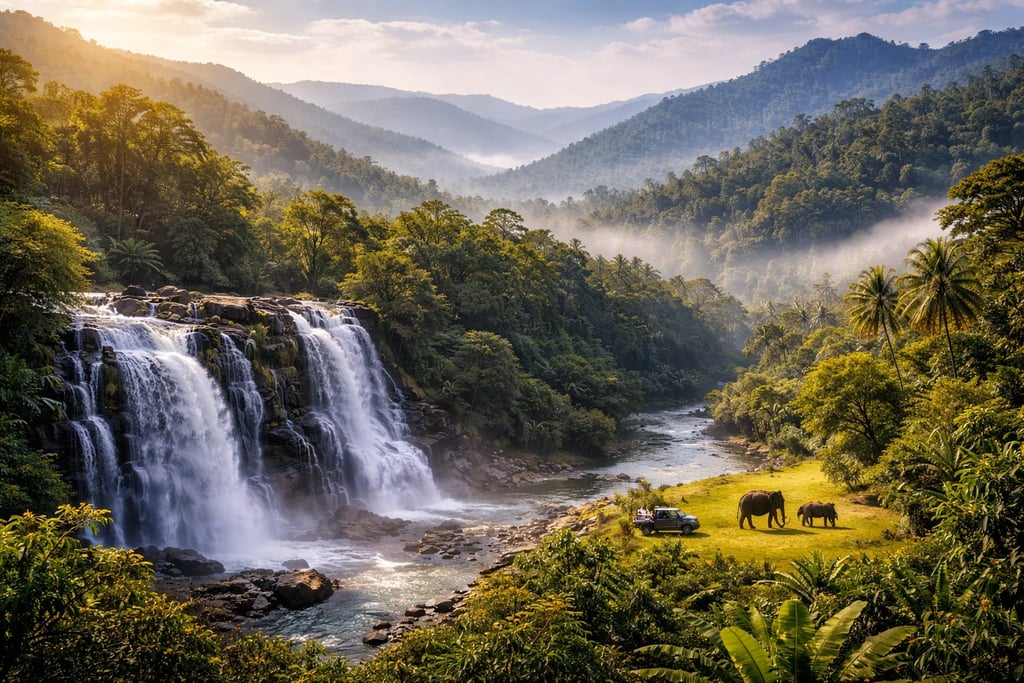
In Karnataka, the Western Ghats reveal their most enchanting form — rolling emerald hills, mist-covered forests, roaring waterfalls, deep valleys, and ancient mountain ranges that feel untouched by time. This region is globally celebrated as one of the world’s eight hottest biodiversity hotspots, home to thousands of plant species, rare animals, and ecosystems found nowhere else on the planet.
For international travellers, the Western Ghats offer something rare: raw nature combined with safety, serenity, and soul-stirring beauty. Whether you seek adventure, wildlife encounters, wellness retreats, or peaceful immersion in nature, the Western Ghats in Karnataka promise an unforgettable journey into Earth’s living heritage.
Biodiversity Hotspot – Where Life Thrives in Every Shade of Green
The Western Ghats are a biological treasure house, supporting an astonishing variety of life forms. Scientists estimate that nearly 30% of India’s plant and animal species can be found here, many of which are endemic, meaning they exist nowhere else on Earth. This makes the Western Ghats not just a travel destination, but a globally important ecological zone.
In Karnataka, the forests shelter iconic wildlife such as tigers, leopards, Asian elephants, gaur, sloth bears, and over 500 species of birds. The region is equally famous for its rare amphibians, butterflies, orchids, medicinal plants, and ancient trees that have thrived for centuries.
Cloud forests draped in mist create magical landscapes where moss-covered branches, flowing streams, and hidden wildlife offer a dreamlike experience. For nature lovers, photographers, researchers, and eco-conscious travellers, the Western Ghats feel like stepping into a living documentary — vibrant, untouched, and endlessly fascinating.
Wildlife Safaris – Into the Heart of Untamed Nature
One of the most thrilling ways to experience the Western Ghats is through wildlife safaris in Karnataka’s protected reserves and national parks. These forests form critical corridors for endangered species and offer responsible, conservation-led tourism experiences for visitors.
Safaris here are quieter and more intimate than many other wildlife destinations, allowing travellers to observe animals in their natural habitats — elephants moving in herds, deer grazing silently, birds calling across forest canopies, and, if lucky, the majestic tiger emerging from the shadows.
The focus is not only on sightings, but on understanding ecosystems, conservation efforts, and the delicate balance between humans and nature. Guided safaris led by trained naturalists make the experience educational, ethical, and deeply rewarding — especially for international visitors seeking meaningful wildlife encounters rather than crowded tourism.
Trekking & Adventure – Trails Through Cloud Forests and Peaks
For adventure seekers, the Western Ghats are a paradise of trekking trails, forest walks, mountain hikes, and panoramic viewpoints. Karnataka’s Western Ghats offer routes that wind through dense rainforests, rolling grasslands, rocky ridges, and misty hilltops where clouds drift gently across the path.
Trekking here is not just physical adventure — it is sensory immersion. The sound of birds, the scent of wet earth, sudden waterfall views, and the feeling of ancient forests surrounding you create moments of pure connection with nature. Trails vary from gentle walks to challenging climbs, making them suitable for beginners as well as seasoned trekkers.
For foreign travellers, these treks offer safety, guidance, and authenticity — a chance to explore India’s wild landscapes without compromising comfort or responsibility.
Waterfalls, Wellness & Slow Nature Experiences
The Western Ghats are home to some of India’s most spectacular waterfalls, especially during and after the monsoon season. Cascading through cliffs and forested valleys, these waterfalls create dramatic scenery and tranquil retreat spaces.
Beyond adventure, the region is perfect for slow travel and wellness tourism. Hill retreats, forest lodges, yoga centres, and eco-resorts allow visitors to unwind, detox, and reconnect with nature. Early morning mist, bird calls, cool breezes, and star-filled nights create a deeply restorative environment.
This balance of excitement and calm makes the Western Ghats ideal for couples, families, solo travellers, photographers, and wellness seekers alike.
Why the Western Ghats Are a UNESCO Treasure
UNESCO recognition highlights the Western Ghats’ outstanding universal value — their ancient geological history, ecological richness, and critical role in sustaining life. Protecting this region means protecting rivers, forests, climate systems, and biodiversity that impact millions of lives.
For global travellers, visiting the Western Ghats is more than sightseeing — it is participating in the appreciation and preservation of one of Earth’s most precious natural legacies.
Explore the Western Ghats with Confidence & Care
A journey through the Western Ghats of Karnataka offers wild beauty, quiet wonder, and meaningful connection with nature. With thoughtfully planned travel, expert guidance, and responsible tourism practices, this UNESCO Natural Site becomes an experience that inspires, heals, and stays with you forever.
The Western Ghats are not just seen — they are felt.
05.Iconic Tourist Attractions Beyond UNESCO
Karnataka isn’t just history — it’s living adventure. Here are major must-visit places for any international traveller:
🏰 Historical & Cultural Marvels
Mysore Palace (Amba Vilas Palace) – A royal spectacle of Indo-Saracenic architecture and evening illuminations.
Srirangapatna – Island fortress with Daria Daulat Bagh, Tipu Sultan’s Fort and Mausoleum, and serene bird sanctuary views.
Gol Gumbaz (Bijapur) – Second-largest dome in the world with a fascinating whispering gallery.
Badami Cave Temples – Ancient rock-cut sanctuaries carved into sandstone cliffs with Hindu, Jain, and Buddhist motifs.
Chitradurga Fort – Rugged multi-layered fort with dramatic battlements and secret passages.
🌿 Nature & Wildlife
Coorg (Kodagu) – Misty coffee hill station with lush estates and waterfalls.
Nagarhole National Park – Tiger reserve and wildlife sanctuary teeming with elephants, leopards, and deer.
Western Ghats Escapes – Agumbe (rainforest), Kudremukh (mountain meadows), and BR Hills (biodiverse sanctuaries).
🌊 Beach & Spiritual Stops
Gokarna – A laid-back spiritual beach town with pristine sands and temples.
Murudeshwar – Giant Shiva statue overlooking the sea.
🌟 Why Karnataka is a Magnet for Foreign Tourists
✨ Architectural Grandeur: From Vijayanagara epics to Hoysala finesse.
✨ Biodiversity & Eco-tourism: Hills, jungles, and endemic wildlife.
✨ Royal Legacies: Palaces and hill towns with regal charm.
✨ Cultural Diversity: Festivals, cuisine, arts, and pilgrim trails.
United Kingdom: +44 7345191205
UK India Tourism© 2026. All rights reserved.
India: +91 9958480873
⭐⭐⭐⭐⭐ 4.9/5 | 2,600+ Travelers | 18 Years | 98% Recommend